
The frost warning light means the outside air is cold enough for ice to form on the road. It often appears near 39°F (4°C), but the trigger temperature varies by car. The snowflake does not detect ice directly. Slow down, leave more space and use gentle steering, braking and acceleration, especially on bridges.
Also called snowflake dashboard light, ice warning light, low outside temperature warning, icy road warning
What to do right now
- Slow down gently and leave more space. Avoid sudden braking, steering or acceleration.
- Watch bridges, shaded bends and untreated roads. Ice may stay even when the displayed air temperature rises.
- Cancel cruise control if roads may be slippery. Keep control of speed with the pedals.
- Clear ice from windows and lights before setting off. Delay travel or stop somewhere safe if conditions leave too little grip.
- Check the outside temperature reading if the warning appears in warm weather. Have a doubtful reading checked.
Find out what's wrong with your car
Tell us your car and what you've noticed. You'll get a safety verdict and the three most likely causes, free.
Light selectedFrost warning light
Free result
- Can you keep driving
- Top 3 likely causes for your car
- DIY or mechanic for each
Fix Plan
- Every cause, ranked for your car
- What to test first
- Parts list and step-by-step DIY guide
- Printable PDF
Start free. You can choose the Fix Plan after you see your result.
Common causes
These are general possibilities. Your car, symptoms and fault codes help narrow them down.
Outside air has reached the frost warning trigger temperature
This is normal, often near 39°F (4°C). The exact temperature and symbol colour depend on your car.
Car has entered a colder area
Temperature can change along a route. Treat the warning as a reminder to check road conditions again, not proof of ice.
Temperature remains within the warning range
Some displays keep the symbol on until temperature passes a separate point for clearing it. No repair is needed.
Outside air temperature sensor or wiring gives a false reading
Repair may mean a confirmed sensor or local wiring repair. Check a consistently, clearly wrong temperature reading before replacing parts.
Steady vs flashing
Steady
A steady snowflake usually warns of low outside temperature. Some cars change its colour as temperature falls. Check the manual for the trigger temperatures.
Flashing
A brief flash or chime may tell you the temperature has reached a set point. It does not prove ice is there. A snowflake on an air conditioning control has a different meaning.
At a glance
- Severity
- ● Info
- Can I keep driving?
- Yes. It's not a car fault. It means the road could be icy, so slow down.
- Most common cause
- Outside temperature near freezing
- DIY difficulty
- Easy
- Systems
- Outside temperature display, road condition reminder
Codes behind this light
These codes often come with this light. Read the codes stored in your car before you replace any part.
Read your fault code
The light is the warning. The code tells you why. A code helps narrow down the checks. It doesn't prove which part failed.
Look up a code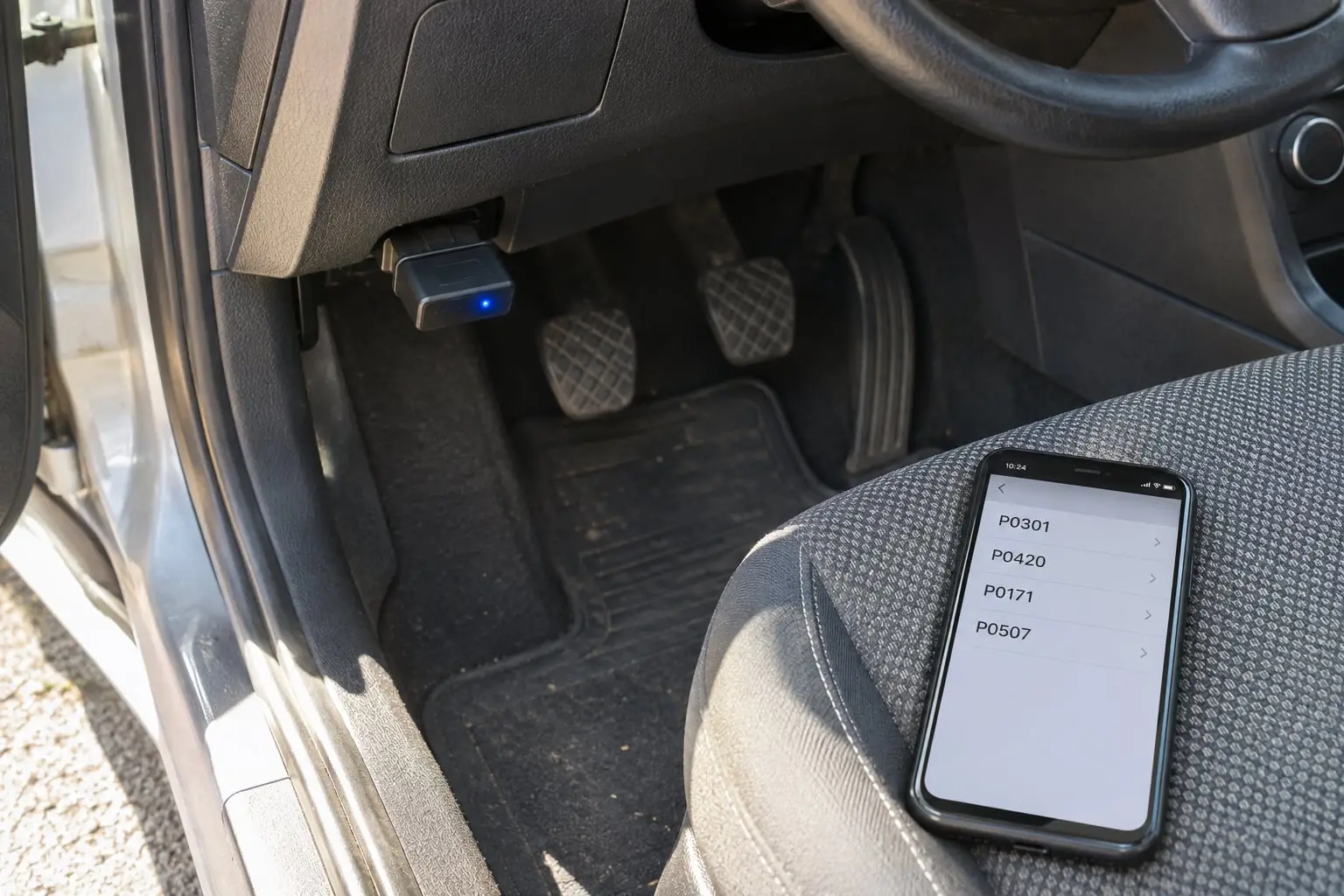
No scanner?
- Get a free scan at a parts store. Many free scans read engine codes only.
- Compare Bluetooth scanners. Check which systems each one reads before you buy.
- Describe your symptoms if you can't read the code yet.
Our pickBlueDriver Pro
Most drivers who want code explanations and repair reports, plus ABS and airbag code reading on supported cars.
How to reset it
Write down the fault code and fix the cause before clearing the light. A reset does not repair a fault.
Check your owner's manual for the reset steps for your car.
Other names for this light
- UKice warning lamp
- AUlow outside temperature indicator
- CAicy road warning
Common questions
What does the snowflake on my dashboard mean?
A snowflake beside the outside temperature usually warns of possible icy roads. It uses an air temperature reading, not a road ice detector. A snowflake on the climate control panel normally means air conditioning instead.
Why does the frost light come on above freezing?
Road surfaces can be colder than the air around them, so many cars warn before the air reaches freezing. A common trigger is about 39°F (4°C), but the exact trigger temperature varies. Bridges and shaded areas need extra care.
Can I drive with the frost warning light on?
Yes, if conditions allow safe travel, but slow down and leave more space. The indicator does not mean your car has broken down. It also cannot tell you how much grip you have, so judge the road itself.
How do I turn off the frost warning light?
It normally clears as the outside temperature rises past your car's set trigger point. There is usually no repair or reset needed. If it appears in warm weather with a false temperature reading, have the sensor and wiring checked.
How much does a frost warning light cost to fix?
The repair depends on the cause. A normal frost warning needs no repair. A false reading may need temperature sensor or wiring repairs. Check the reading, read any relevant codes and diagnose first. Diagnosis shows which parts are needed and whether the repair is a DIY job or needs a mechanic. This is guidance, not a professional inspection. If in doubt, stop safely and call for help.
Related lights

Sources
Last updated · How we write our guides
This is guidance, not a professional inspection. If in doubt, stop safely and call for help.