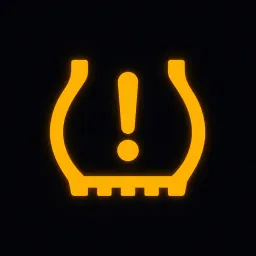
A steady tire pressure light usually means at least one tire has far too little air. Stop somewhere safe and check every tire with a gauge. Flashing for 60–90 seconds at start-up, then staying on, usually means a TPMS fault. Do not drive on a flat or damaged tire, even if the warning seems electrical.
Also called TPMS light, tire pressure sensor light, low tire pressure warning, horseshoe warning light
What to do right now
- Slow gently and stop somewhere safe. Check for a flat tire, visible damage or unusual handling.
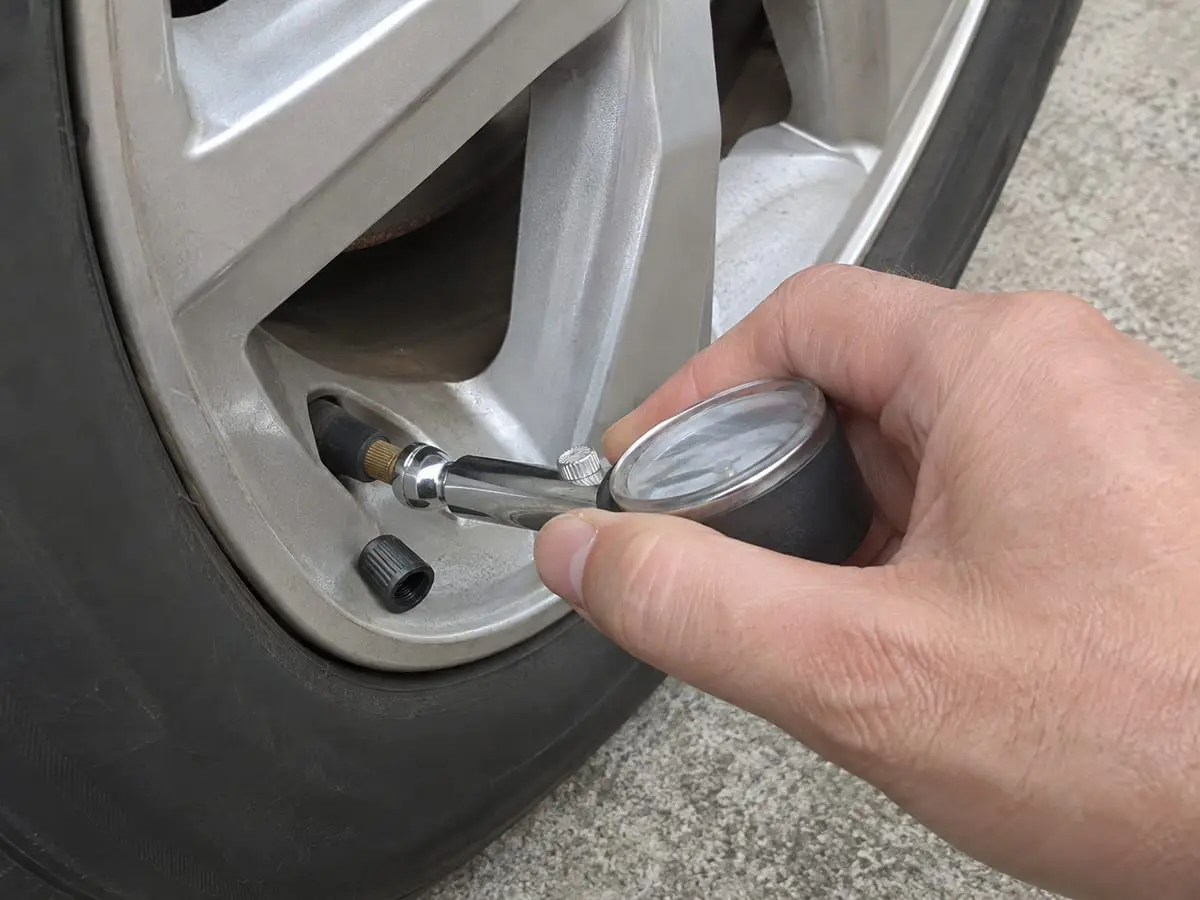
- Measure every road tire with a gauge. Check the spare too if your manual says the system monitors it.
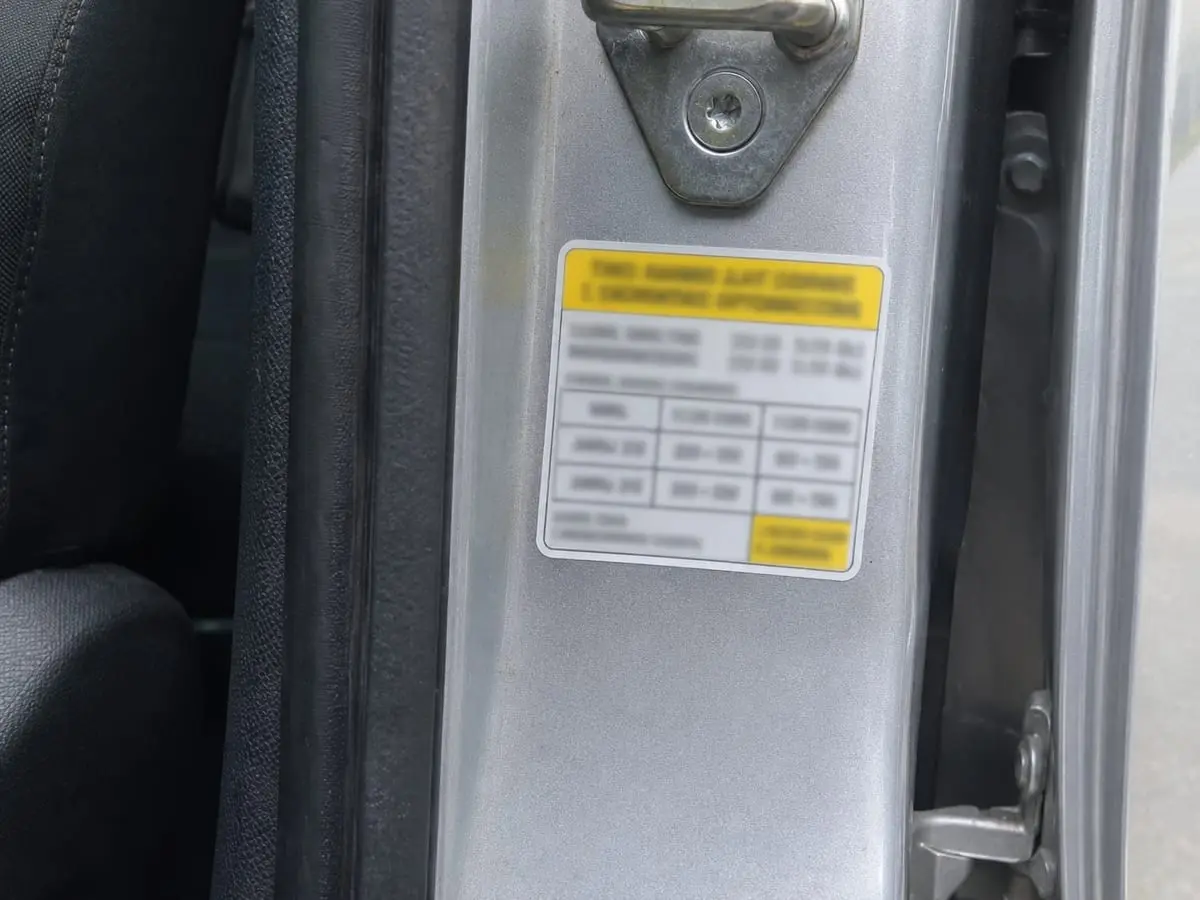
- Inflate to the cold pressure on your car's placard or in its manual. Do not aim for the maximum on the tire sidewall.
- Call for help if a tire is flat, damaged or cannot hold pressure. Do not drive to warm up an underinflated tire.
- Follow the manual's reset or relearn steps only after setting pressures correctly. Have a check for leaks if pressure keeps dropping.
- Get TPMS diagnosis if the light flashes then stays on despite correct pressures. Check pressures manually until it is fixed.
Find out what's wrong with your car
Tell us your car and what you've noticed. You'll get a safety verdict and the three most likely causes, free.
Light selectedTire pressure light
Free result
- Can you keep driving
- Top 3 likely causes for your car
- DIY or mechanic for each
Fix Plan
- Every cause, ranked for your car
- What to test first
- Parts list and step-by-step DIY guide
- Printable PDF
Start free. You can choose the Fix Plan after you see your result.
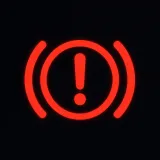
Not the same as
These look close to the tire pressure light. Check the shape and colour.

Common causes
These are general possibilities. Your car, symptoms and fault codes help narrow them down.
Cold weather or gradual pressure loss
Pressure drops about 1 psi per 10°F temperature fall. Check the air and set cold pressures to the placard.
Repairable tread puncture or leaking valve
Have a tire shop check the leak and whether repair is suitable. Sidewall damage generally needs replacement.
Failed TPMS sensor or sealed sensor battery
This applies to direct systems with wheel sensors. A replacement sensor needs fitting and relearning.
Missing sensor or relearn needed after wheel work
Check compatible sensors and your car's relearn requirements where needed. Indirect systems use wheel speed data instead.
Wheel speed sensor fault on an indirect system
ABS warnings may also appear. Use a scanner that supports the affected system.
Steady vs flashing
Steady
A steady light usually warns of low pressure. Cold weather can trigger it even without a puncture. Check with a gauge, because you cannot tell from how tires look. A warning that disappears as tires warm still needs a cold-pressure check.
Flashing
On many cars, flashing for 60–90 seconds at start-up then staying on means a TPMS sensor or system fault. It can repeat at each start. Some systems use a separate TPMS indicator. Check your manual.
At a glance
- Severity
- ▲ Check soon
- Can I keep driving?
- Not until you check your tires. Stop if one is flat or damaged, or the car shakes or handles badly.
- Most common cause
- Low tire pressure from cooling weather, gradual air loss or a leak
- DIY difficulty
- Easy
- Systems
- Tire pressure monitoring, tires and sometimes ABS wheel speed sensing
Read your fault code
The light is the warning. The code tells you why. A code helps narrow down the checks. It doesn't prove which part failed.
Look up a code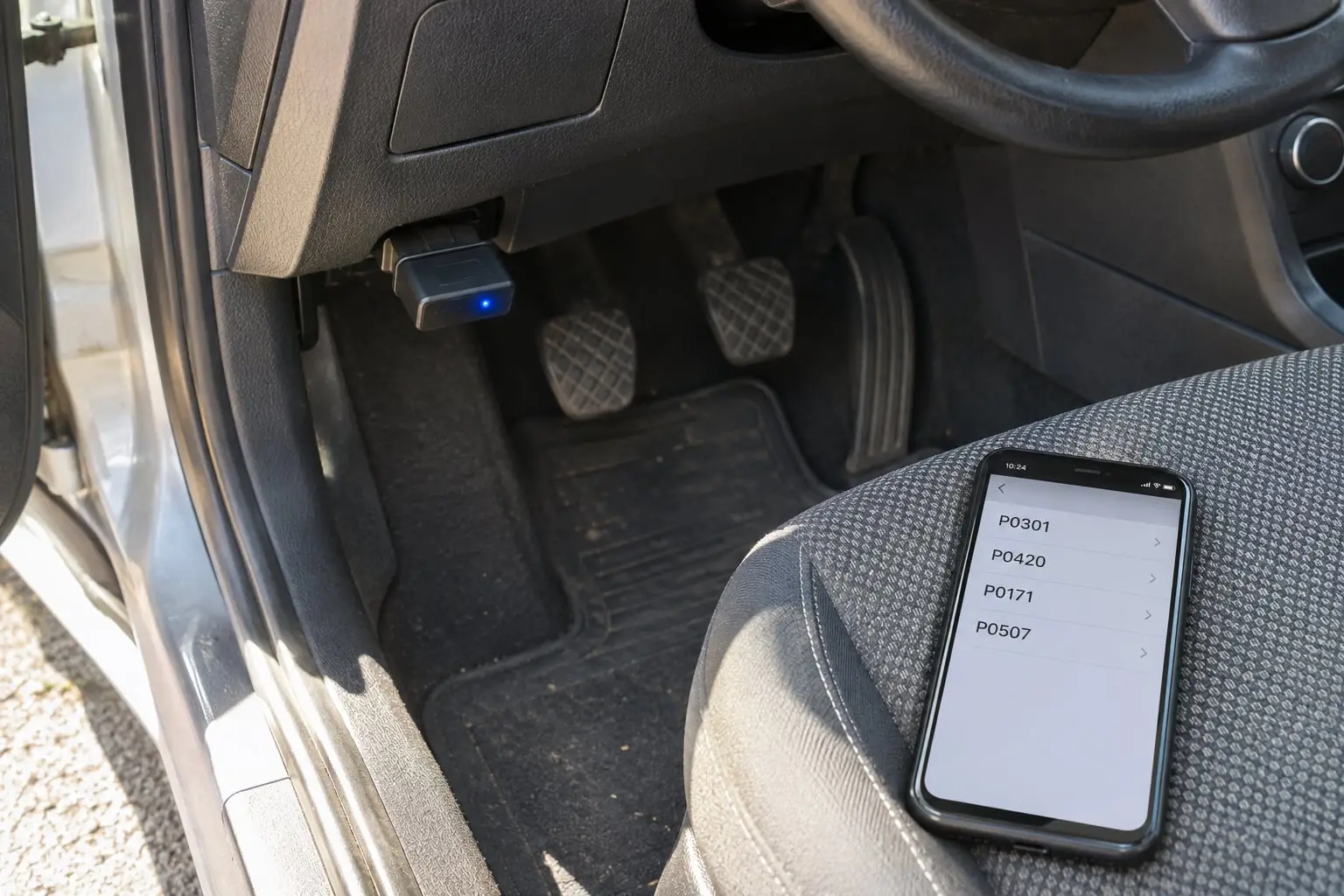
No scanner?
- Get a free scan at a parts store. Many free scans read engine codes only.
- Compare Bluetooth scanners. Check which systems each one reads before you buy.
- Describe your symptoms if you can't read the code yet.
Our pickBlueDriver Pro
Most drivers who want code explanations and repair reports, plus ABS and airbag code reading on supported cars.
By make





















How to reset it
Write down the fault code and fix the cause before clearing the light. A reset does not repair a fault.
Read the reset stepsOther names for this light
- UKtyre pressure warning light
- AUtyre pressure monitoring light
- CAtire pressure monitor light
Common questions
What does the tire pressure light mean?
It usually means a tire is badly underinflated. Check all road tires with a gauge and use your car's cold-pressure label. The same light can report a system fault after flashing, so note what it does when you start your car.
Why is my tire pressure light flashing?
Flashing for 60–90 seconds followed by a steady light usually means the TPMS is not working correctly. A failed sensor, missing sensor or relearn problem may be behind it. Check tire pressures manually too, because a system fault does not rule out low pressure.
Why is my tire pressure light on when it is cold?
Cooling air lowers tire pressure by about 1 psi for every 10°F temperature drop. That can push a slightly low tire below the point where the warning comes on. Set pressures when cold. Do not rely on driving to warm the tires and turn the light off.
How do I reset the tire pressure light?
Set all tire pressures correctly first, then follow the reset or relearn steps in your owner's manual. Some cars clear the light after driving. Others need calibration or a tool. Do not reset around a leak or use a reset to ignore low pressure.
How much does it cost to fix a tire pressure light?
The repair depends on the cause. It may need work on a repairable leak, a replacement TPMS sensor or tire replacement. Tire size matters when choosing a replacement. Check pressures, read any TPMS codes and diagnose first. Diagnosis shows which parts are needed and whether a DIY check is suitable or a tire shop is needed. This is guidance, not a professional inspection. If in doubt, stop safely and call for help.
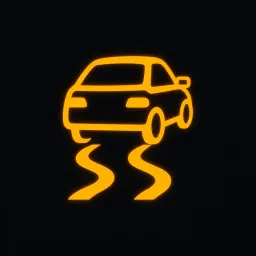
Related lights



Sources
- NHTSA: Tire safety and TPMS warning behaviour
- Toyo Tires: Pressure changes with temperature and tire safety
- Toyota: Checking tire pressure
Last updated · How we write our guides
This is guidance, not a professional inspection. If in doubt, stop safely and call for help.