
Toyota dashboard symbols and meanings use red for urgent warnings, amber for checks and green or blue for features in use. Toyota's master warning triangle points to a display message and can be red or amber depending on the model. An exclamation point inside a tire shape means tire pressure. Read the shape and message together.
Also searched toyota dash icons, toyota warning lights, toyota alert lights, toyota exclamation point light, orange triangle exclamation point toyota, flashing exclamation point toyota, toyota camry dashboard symbols and meanings, camry warning symbols, toyota rav4 dashboard symbols and meanings, dashboard signs toyota corolla, toyota yaris dashboard symbols and meanings
Find your Toyota symbol
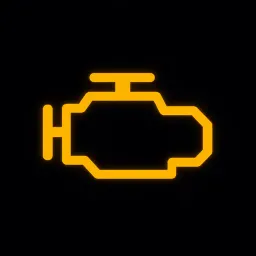 Malfunction indicator lamp▲ Check soon
- Malfunction indicator lamp flashing■ Stop now
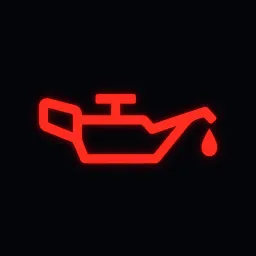 Low engine oil pressure warning■ Stop now
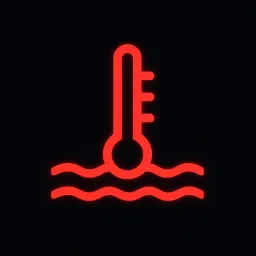 High coolant temperature warning■ Stop now
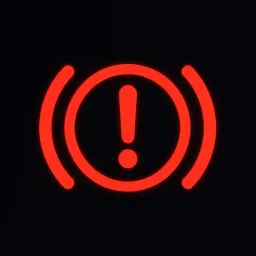 Brake system warning■ Stop now
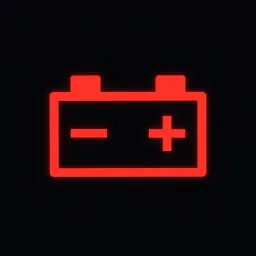 Charging system warning▲ Check soon
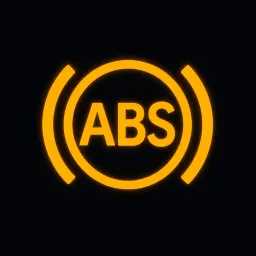 ABS warning▲ Check soon
 SRS warning▲ Check soon
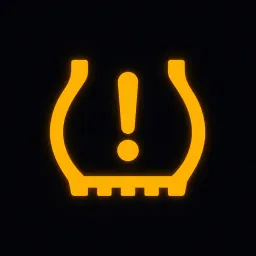 Tire pressure warning▲ Check soon
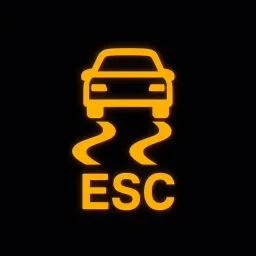 Slip indicator / Vehicle Stability Control (VSC)▲ Check soon
 High beam indicator● Info
 Master warning light, amber▲ Check soon
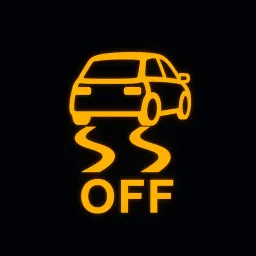 VSC OFF indicator● Info
 MAINT REQD / maintenance required● Info
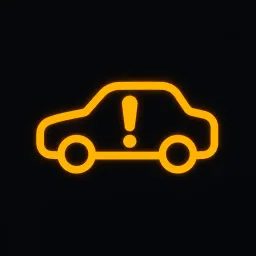 Hybrid system warning message▲ Check soon
Find out what's wrong with your car
Pick the light or enter the code, then add your Toyota model and what you've noticed. You'll get a safety verdict and the three most likely causes, free.
Make selectedToyota
Free result
- Can you keep driving
- Top 3 likely causes for your car
- DIY or mechanic for each
Fix Plan
- Every cause, ranked for your car
- What to test first
- Parts list and step-by-step DIY guide
- Printable PDF
Start free. You can choose the Fix Plan after you see your result.
Red Toyota warning lights
Low engine oil pressure warning ■ Stop now
Engine oil pressure may be too low to protect moving parts. This is not an oil change reminder.
What to do: Stop safely and switch the engine off. Do not restart until someone has checked the cause.
High coolant temperature warning ■ Stop now
The engine is overheating. Some models show a red temperature message instead of this symbol.
What to do: Stop safely and turn the engine off. Let it cool. Never open a hot coolant cap.
Brake system warning ■ Stop now
If your parking brake is released, this can mean low brake fluid or a brake system fault.
What to do: Stop safely. Do not drive on until someone checks it. Have a mechanic do brake hydraulic repairs.
Charging system warning ▲ Check soon
The charging system is not providing power normally while the engine is running.
What to do: You can only drive a short way. Head for help now. Stop safely if power fades or the engine overheats.
SRS warning ▲ Check soon
The airbag or seat belt restraint system has a fault. Some protection may not work in a crash.
What to do: Book a professional diagnosis soon. Have a mechanic do SRS repairs. Do not touch airbag connectors.
Yellow / amber Toyota warning lights
Malfunction indicator lamp ▲ Check soon
A steady light means the engine computer found an engine or emissions fault.
What to do: Read the stored codes soon. Avoid long trips. Stop safely for smoke, a burning smell or a fuel smell.
Malfunction indicator lamp flashing ■ Stop now
A flashing engine light usually means a misfire that can overheat the catalytic converter.
What to do: Ease off the accelerator. Stop safely, turn the engine off and get help.
ABS warning ▲ Check soon
Anti-lock braking may not work. Your normal braking usually still works if the red brake warning is off.
What to do: Drive carefully to a shop. Stop and get help if the red brake warning is also on.
Tire pressure warning ▲ Check soon
One or more tires may have too little air. Flashing then staying on usually means a monitoring fault.
What to do: Stop somewhere safe and check cold pressures against the label on your door. Repair leaks before any reset.
Slip indicator / Vehicle Stability Control (VSC) ▲ Check soon
A steady warning can mean stability control has a fault. Flashing during wheel slip usually means it is working.
What to do: Ease off if it flashes on a slippery road. Get a warning that stays on checked. Read the cluster message.
Master warning light, amber ▲ Check soon
On models with an amber master warning, the triangle points to a display message. Some Toyotas use a red triangle.
What to do: Read the full message. Stop safely for a red master warning or any instruction to stop.
VSC OFF indicator ● Info
Vehicle Stability Control is switched off or not working. An engine fault can also switch it off on some models.
What to do: Check for other warnings. Turn VSC back on using the manual's controls only if there is no fault.
MAINT REQD / maintenance required ● Info
On models with this feature, this is a scheduled maintenance reminder. It is separate from the engine fault light.
What to do: Complete the due service and then reset the reminder. Check the schedule rather than assuming every reminder means the same work.
Hybrid system warning message ▲ Check soon
On a hybrid, a message tells you about a hybrid system fault. Symbol and colour vary by model.
What to do: Follow the message. Stop if told to stop or if power is lost. Have a trained professional do high-voltage repairs.
Green, blue and white indicator lights
High beam indicator ● Info
The main beam headlights are on. This normally just shows they are on.
What to do: Use dipped headlights when needed so you do not dazzle other road users.
Symbols unique to Toyota

Toyota exclamation point symbols
An exclamation point inside a triangle is a master warning. Inside a tire-shaped outline, it is about tire pressure. Inside a brake circle, it can mean a brake problem.
What to do: Check the shape around it and read the message. Stop for a red brake fault or red master warning. Do not treat every exclamation point as TPMS.

Toyota master warning triangle
Older Prius models often use a red triangle. Other Toyotas can use amber master warnings. The triangle points you to a message, rather than naming a failed part.
What to do: Read the multi-information display. Follow any stop instruction and get codes from the affected system, including hybrid modules when they apply.

Toyota MAINT REQD reminder
MAINT REQD is a maintenance reminder where fitted on Toyotas. Brief flashing around startup can mean service is approaching. This is different from a flashing engine warning.
What to do: Check the service schedule and complete the due work. Never reset the reminder because of red oil pressure.
Common Toyota codes
- P0171
Lean mixture, bank 1. Some older Corolla and Matrix engines have intake gasket leaks in cold weather.
- P0420
Catalyst efficiency below threshold, bank 1. Check exhaust leaks, sensor data and how the engine runs first.
- P0300
Multiple-cylinder misfire. Diagnose ignition, fueling and compression. A flashing engine light means stop.
- P0441
Incorrect evaporative purge flow. Check purge control and hoses on the fuel vapor system your car has.
- P0455
Large evaporative emissions leak. Check the cap if fitted, then test the system rather than guessing.
- P0456
Very small evaporative emissions leak. A smoke test can tell a seal, hose or valve fault apart.
- P0A80
Hybrid battery deterioration fault on hybrids with this system. Have professional testing done before high-voltage battery work.
Toyota known issues by model
An issue on this list doesn't mean your car has a recall or a fault. Use your VIN to check recalls.
Corolla / Matrix 2003–2008
Some 1.8L 1ZZ-FE engines have intake manifold gasket leaks in below-freezing weather. Lean or misfire codes can appear after a cold start.
Camry 2007–2009
Some 2.4L 2AZ-FE engines use too much oil. Check the level regularly and have ongoing oil use checked. Stop for red oil pressure.
Prius 2010–2015
Some cars have brake booster or booster pump faults that turn on brake, ABS or traction warnings. Stop for a red brake warning. Have a professional do repairs.
How to reset Toyota lights
Fix warning-light faults before clearing codes. Service reminders have different reset steps.
Reset Toyota maintenance required after service
- Complete the work due in the maintenance schedule.
- On models with a maintenance menu, select the scheduled or oil maintenance reset in the cluster settings.
- Use the model's trip-meter procedure only if the manual says to. Check that the reminder clears after restarting.
- Steps vary by model and year. Check your owner's manual.
Initialize Toyota tire pressure monitoring
- Set all monitored tires to the door label's cold pressures and repair leaks first.
- Use the TPMS setting menu or reset switch only if your fitted system needs initialization.
- Keep your car stopped for the first confirmation and complete any learning drive as instructed. New sensors may need registration.
- Steps vary by model and year. Check your owner's manual.
Read your fault code
The light is the warning. The code tells you why. A code helps narrow down the checks. It doesn't prove which part failed.
Look up a code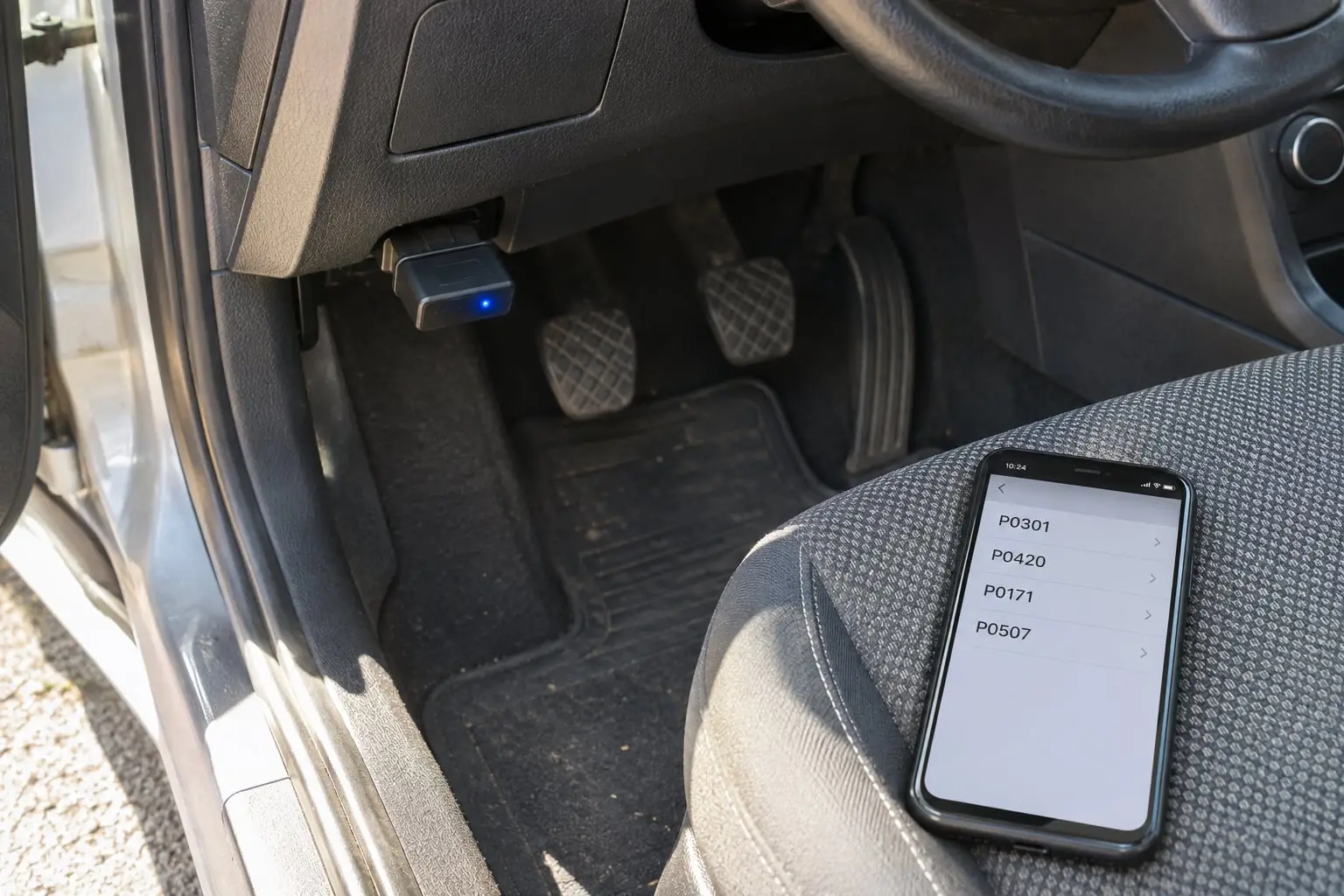
No scanner?
- Get a free scan at a parts store. Many free scans read engine codes only.
- Compare Bluetooth scanners. Check which systems each one reads before you buy.
- Describe your symptoms if you can't read the code yet.
Best scanner for ToyotaBlueDriver Pro
Most drivers who want code explanations and repair reports, plus ABS and airbag code reading on supported cars.
Check support for your exact model, year and system before buying. A basic engine reader may not read Toyota ABS or airbag codes.
Toyota models
Corolla · Camry · RAV4 · Prius · Yaris · Highlander · Tacoma · Tundra · Hilux · Land Cruiser
Common questions
What do Toyota dashboard symbols and meanings tell me?
Toyota symbols show a fault, reminder or feature in use. Read the symbol shape and display message together. Red oil pressure, overheating and brake faults mean you must stop safely. Amber warnings need attention, while green and blue usually show active systems.
What does the Toyota exclamation point light mean?
The surrounding shape shows the system. A triangle is a master warning, a tire-shaped outline means tire pressure and a circle with brackets can mean brakes. Read the message. Do not assume all Toyota exclamation symbols need the same urgent action.
What does an orange triangle with an exclamation point mean on a Toyota?
An amber or orange triangle is usually the master warning light. It points to a message that explains the problem. Read that message before driving on. Some older Toyotas use a red triangle. That means stop safely and get immediate attention.
Why is the exclamation point flashing on my Toyota?
It depends on the shape. A tire-pressure symbol that flashes then stays on usually means a TPMS fault. Read the display message for a flashing master warning. A red brake warning means stop safely rather than trying a reset.
Can I drive with Toyota warning lights on?
Only after identifying the warnings. Stop for red oil pressure, overheating, a red brake fault or a flashing engine light. A red master warning also means stop safely. This is guidance, not a professional inspection. If in doubt, stop safely and call for help.
Sources
- Toyota owner manuals
- Toyota oil consumption service information via NHTSA
- NHTSA recalls and manufacturer communications
Last updated · How we write our guides
Other makes


















This is guidance, not a professional inspection. If in doubt, stop safely and call for help.